
5 Tips to Extend Your Lipo Drone Battery’s Lifespan in 2026
LiPo batteries aren’t cheap. And if you’re flying commercially — inspections, mapping, agriculture, delivery — replacing packs ahead of schedule is a cost that hits twice: the purchase price and the operational disruption while you wait for new inventory.
The good news is that most premature LiPo drone battery failures aren’t random.
They’re caused by a small set of repeatable mistakes that are entirely avoidable once you know what they are.
Here are five practical tips that actually move the needle on lifespan in 2026 — not theory, just habits that work.

- Store at the Right State of Charge — Every Time
This is the single highest-impact habit change for most operators, and the one most consistently ignored.
Lithium polymer cells stored at full charge experience continuous electrolyte stress. The higher the voltage sitting against the electrode, the faster the degradation compounds. Leave a fully charged pack sitting for a week and you’ve done measurable damage. Do it repeatedly across a season and you’ve shaved a significant chunk off its useful cycle life. - The target storage voltage is 3.8V per cell — roughly 50 to 60% state of charge. Most quality chargers have a dedicated storage charge mode that hits this automatically. If yours doesn’t, it’s worth upgrading to one that does.
After every mission session, put your packs in storage mode before you leave the field. It takes two minutes and extends battery life more than almost anything else on this list. - Never Skip the Warm-Up in Cold Conditions
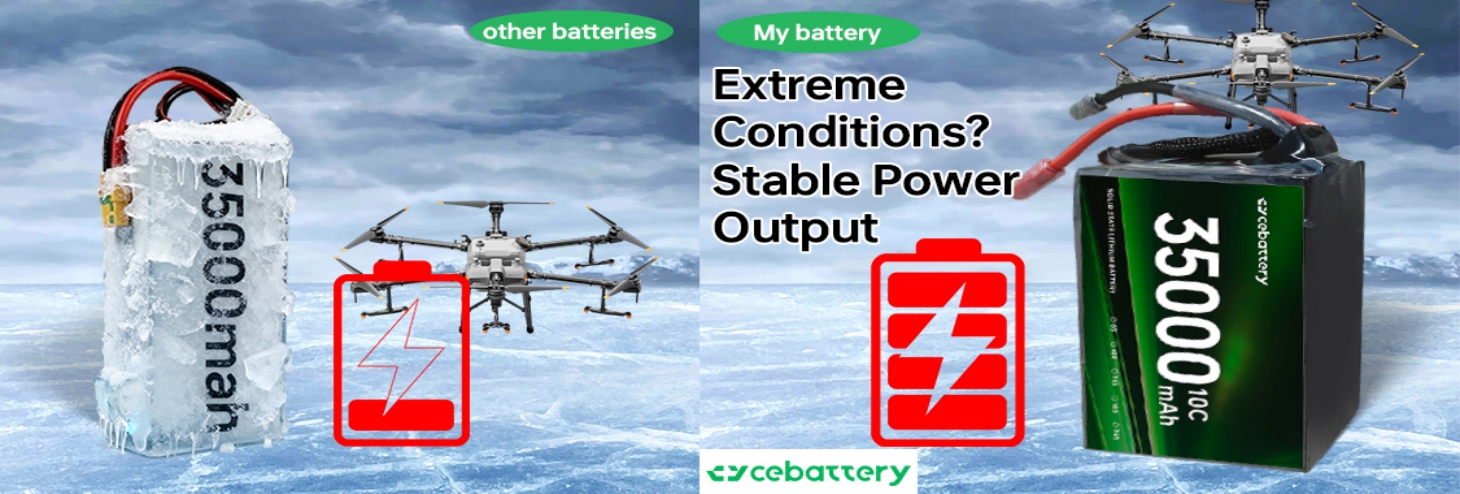
Cold weather and LiPo chemistry are a bad combination. A lipo drone battery that spent the night in a vehicle or equipment case at 30°F has reduced capacity and elevated internal resistance. Flying it hard in that condition — especially with a heavy payload or aggressive maneuvers — stresses the cells in ways that accelerate long-term degradation.
The fix is simple: warm your batteries to at least 60°F before flight. Keep them in an insulated bag or a vehicle cabin before you head to the launch site. In genuinely cold conditions, some operators use low-wattage battery warmers during setup.
Cold-weather damage is cumulative and largely invisible until the pack starts underperforming months later. The warm-up habit prevents that entire problem. - Land With Margin — Stop Draining to the Wire
Low-voltage damage is one of the most common ways drone operators quietly destroy their LiPo batteries. Flying until the low-battery warning triggers, then pushing a little further — it happens constantly, and each instance pulls the cells below safe discharge thresholds.
Lithium polymer cells that regularly see deep discharge lose capacity permanently. There’s no recovery from it.
Set your low-voltage return-to-home threshold conservatively — aim to land with at least 20 to 25% remaining. Yes, you lose a few minutes of flight time per session. Over the lifetime of the pack, you gain dozens of additional usable cycles in return. - Match Your Charger to the Pack
Using an unmatched or uncalibrated charger is a faster way to damage a LiPo battery than most operators realize. Charge rate too high accelerates heat buildup inside the cells. Incorrect charge termination voltage — even slightly off — compounds over hundreds of cycles into measurable capacity loss.
Use a charger explicitly rated for your battery’s cell count, chemistry, and recommended charge rate. When manufacturers specify a 1C charge rate, that recommendation exists for a reason. Pushing 2C regularly to save time costs you cycle life. - Inspect Before and After Every Flight — Not Just When Something Looks Wrong
Physical inspection takes 60 seconds and catches problems before they become expensive. Run your hands along the pack after flight — any unusual warmth compared to normal is worth noting. Look for swelling, even slight deformation along the sides. Check connector condition for discoloration or pitting.
A pack that’s starting to fail gives signals before it fails completely. Catching it early means retiring one battery, not crashing one drone.
A Final Note on Pack Quality
These five habits make a real difference — but they work better with batteries that were built to last.
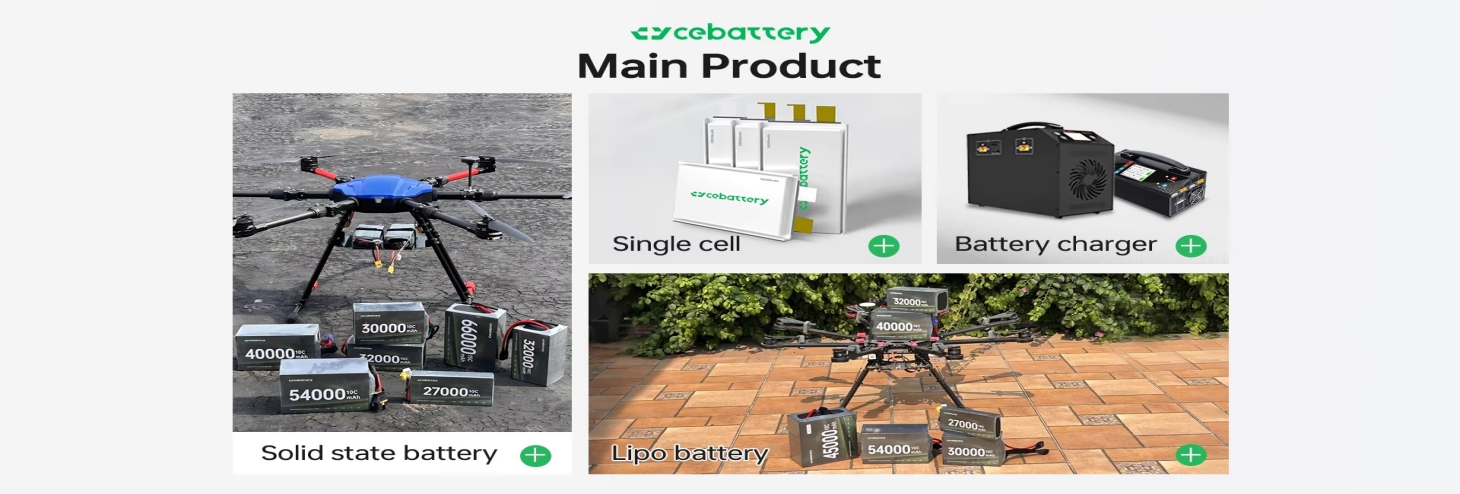
CEBATTERY designs high-performance LiPo drone battery and solid-state lithium-ion UAV batteries with quality cell selection and integrated BMS protection that gives good maintenance habits something solid to work with.
Take care of the battery. Start with one worth taking care of.
