

Which Drone Battery Brand Offers the Great OEM Customization in 2026?
OEM drone battery customization has become a genuine competitive differentiator OEM Customization in 2026 — and for good reason.

As UAV platforms grow more specialized across agriculture, infrastructure, logistics, and defense applications, the idea of fitting a standard battery into a purpose-built aircraft is increasingly a compromise nobody wants to make.
The question isn’t whether to customize. For serious OEM programs, it’s which manufacturer can actually deliver — on specifications, on volume consistency, on timeline, and on the engineering depth that makes real customization possible rather than just cosmetic.
Here’s what separates credible OEM drone battery partners from suppliers who use the word “custom” to mean a logo on a standard pack.
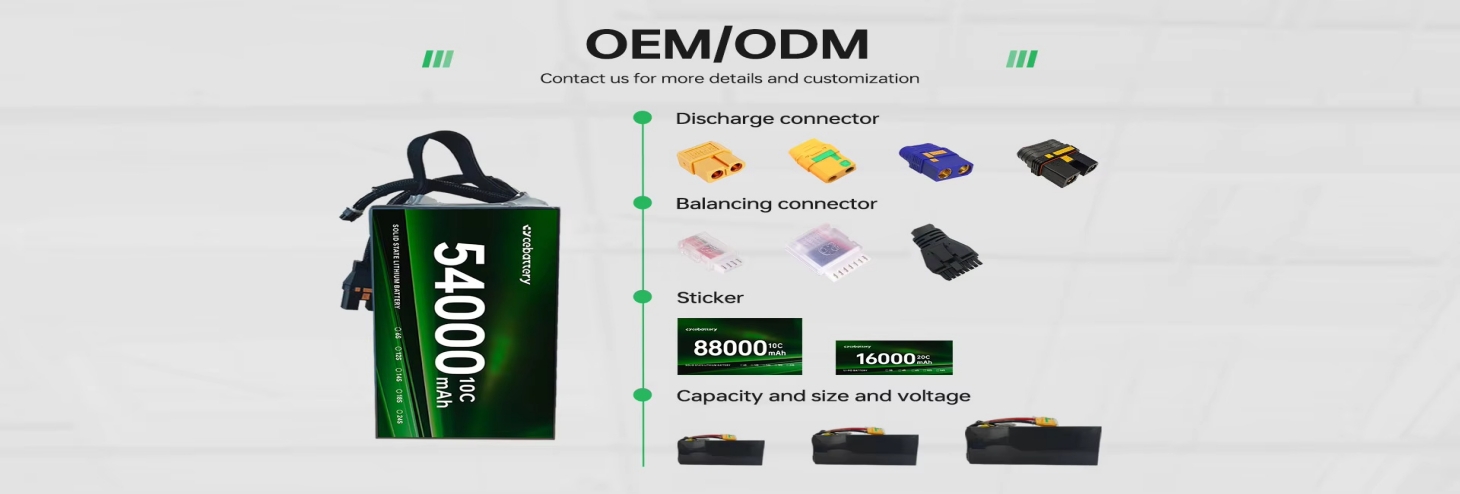
What Real OEM Battery Customization Looks Like
Start by getting specific about what customization actually means at the battery level — because the term gets stretched considerably by manufacturers whose flexibility doesn’t extend much past changing a label.
Genuine OEM Customization in 2026 for drone applications covers:
Cell chemistry selection. Different applications call for different cell choices.
A long-endurance survey UAV and a high-cycle delivery drone have different priorities around energy density, discharge rate, and cycle life.
A real OEM battery partner works through cell selection with the customer rather than defaulting to whatever chemistry is already in production.
Voltage and capacity configuration. Custom cell counts, custom pack voltages, and capacity specifications matched to the aircraft’s actual power system design — not the nearest standard configuration.
Form factor and mechanical design. Battery dimensions, mounting interface, connector placement, and housing design built around the airframe rather than the airframe modified to accept a standard pack.
BMS calibration. Protection thresholds, balancing parameters, telemetry output protocols, and charge management logic tuned to the operating profile of the specific platform — not generic defaults carried over from a standard product.
Communication protocol integration. CAN bus, UART, SMBus, or proprietary flight controller interfaces depending on what the OEM platform requires.
If a manufacturer can deliver all five, that’s genuine OEM Customization in 2026. If they’re offering cell chemistry from column A and a connector from column B, that’s kit-bashing with a custom invoice.
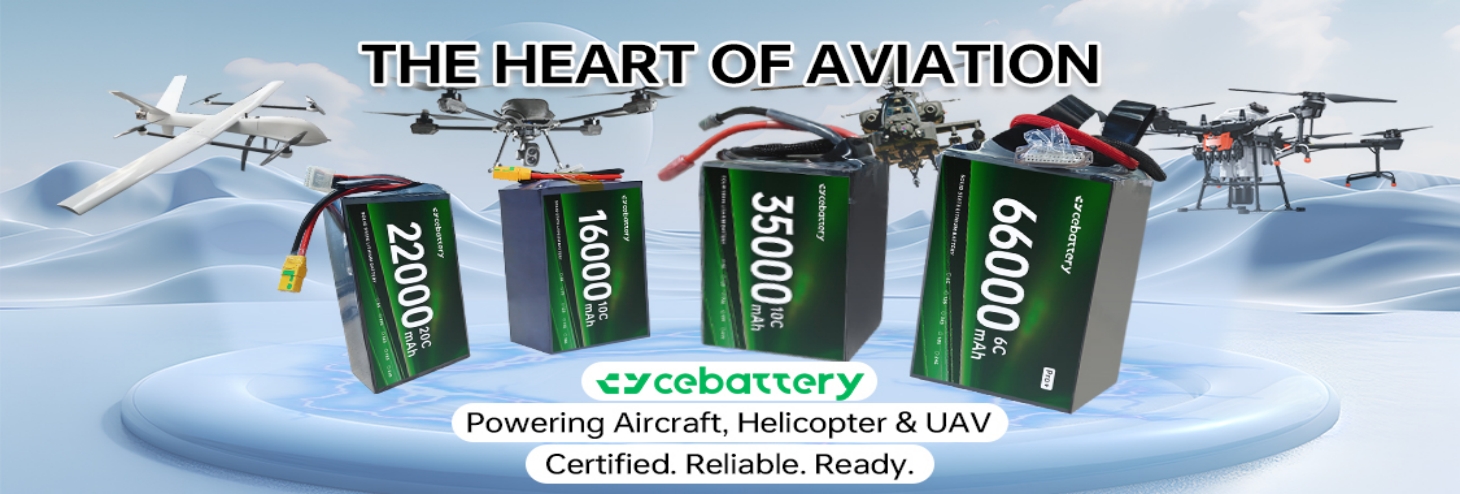
What to Evaluate in an OEM Battery Partner?
Beyond the spec list, the quality of OEM drone battery customization comes down to a few non-negotiable capabilities.
Engineering depth. Customization requires engineers who understand battery electrochemistry, BMS firmware, and UAV power systems well enough to engage with the customer’s design requirements — not just a sales team that forwards requests to a factory.
Ask early and specific technical questions. The quality of the answers tells you what you’re actually dealing with.
Prototyping and validation process. A credible OEM battery supplier has a defined process from specification to prototype to validation — with documented testing at each stage.
Cycle life validation, thermal testing, BMS firmware verification, and compatibility testing with the target platform should all happen before volume production starts.
Production consistency at scale. Prototype performance that doesn’t survive the transition to volume production is one of the most common OEM battery failure modes. Cell matching rigor, quality control processes, and batch-to-batch consistency matter as much at 500 units as at 10.
Certifications and compliance documentation. UN38.3 testing, IEC compliance, MSDS documentation, and whatever airworthiness or regulatory requirements apply to your end application.
OEM programs that reach commercial deployment need this documentation. Verify it exists before the relationship goes deep.
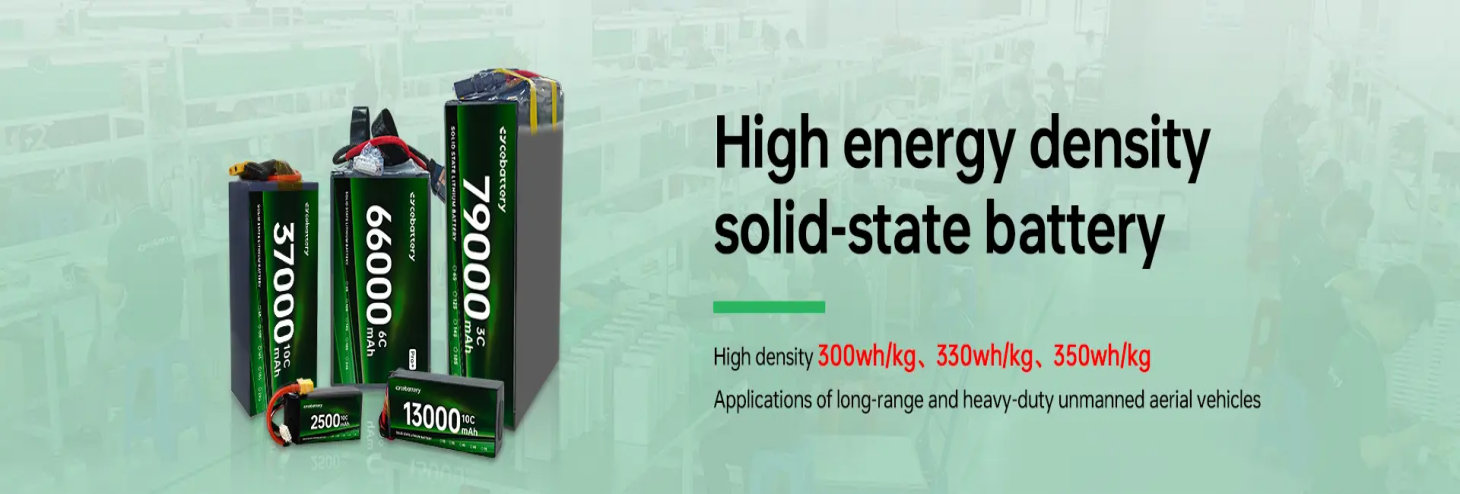
Why Manufacturer Specialization Matters in 2026
The drone battery OEM market has matured enough that the gap between UAV-specialized manufacturers and generalist battery suppliers adapting to the market is visible in the work.
Cell chemistries optimized for UAV discharge profiles, BMS architectures designed around flight controller integration, and production processes developed for the mechanical and thermal demands of aerial applications — these come from manufacturers who built for drones, not ones who pivoted toward them.
CEBATTERY has developed its OEM customization capability specifically around UAV applications — lithium polymer and solid-state lithium-ion battery solutions built to customer specifications across cell configuration, form factor, BMS integration, and communication protocol.
From early-stage engineering engagement through volume production, the process is built for OEM drone programs that need a battery partner, not just a battery supplier.
In 2026, that distinction matters more than ever.

- Is a 6S Lipo Battery Ideal for FPV Beginners or Advanced Racers?
- Which Drone Battery Brand Offers the Great OEM Customization in 2026?
- Meet CEBATTERY at the 2026 Shanghai Low-altitude Economy Expo
- What’s the Top High Voltage Battery for Long-Range UAV Missions?
- Solid State vs Lipo Battery—Which Delivers Better UAV Safety and Life Cycle?