

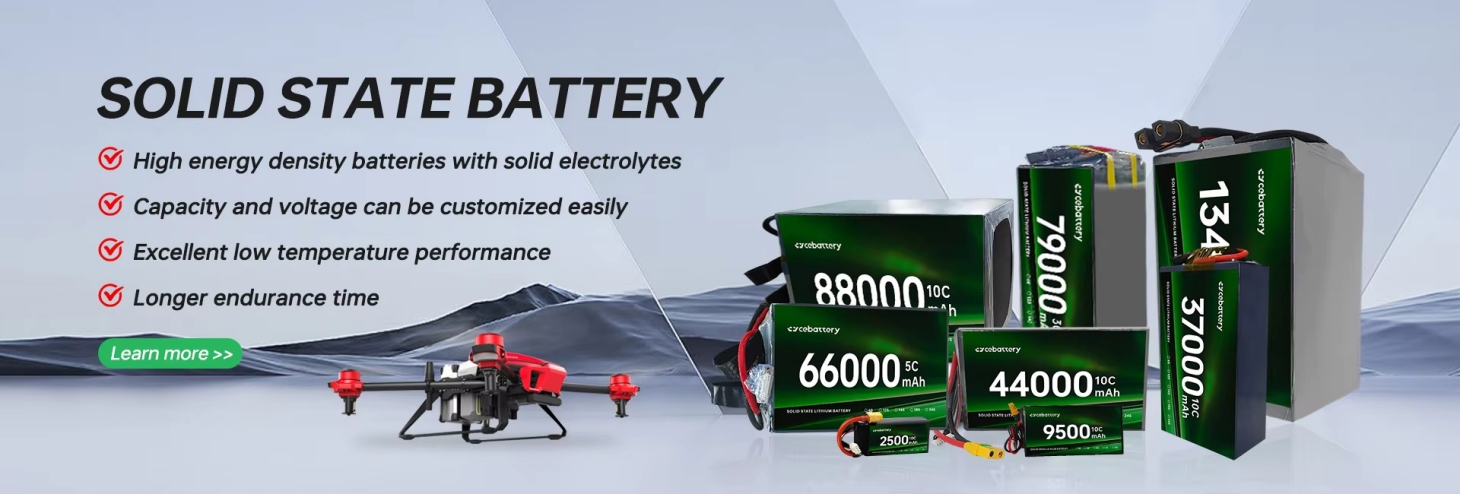
Solid state drone battery wins on safety, potential energy density, and long‑term durability, while traditional LiPo batteries still lead on cost, availability, and ease of use for most everyday drones.
For commercial UAVs that need longer flight time, higher safety, and long service life, solid‑state or semi‑solid packs are increasingly the better strategic choice.
Core technology differences
A solid state drone battery replaces the flammable liquid electrolyte in traditional LiPo packs with a solid or semi‑solid material such as ceramic, glass, or polymer. This change allows the use of lithium‑metal anodes and denser cell structures, which are hard to use safely in classic LiPo designs.
Traditional LiPo (lithium‑polymer) batteries still use liquid electrolytes inside soft pouches, which keeps them light and cheap but more sensitive to puncture, swelling, and overheating. This older chemistry is mature and well understood, which is why it remains the default choice in many consumer‑grade drones.
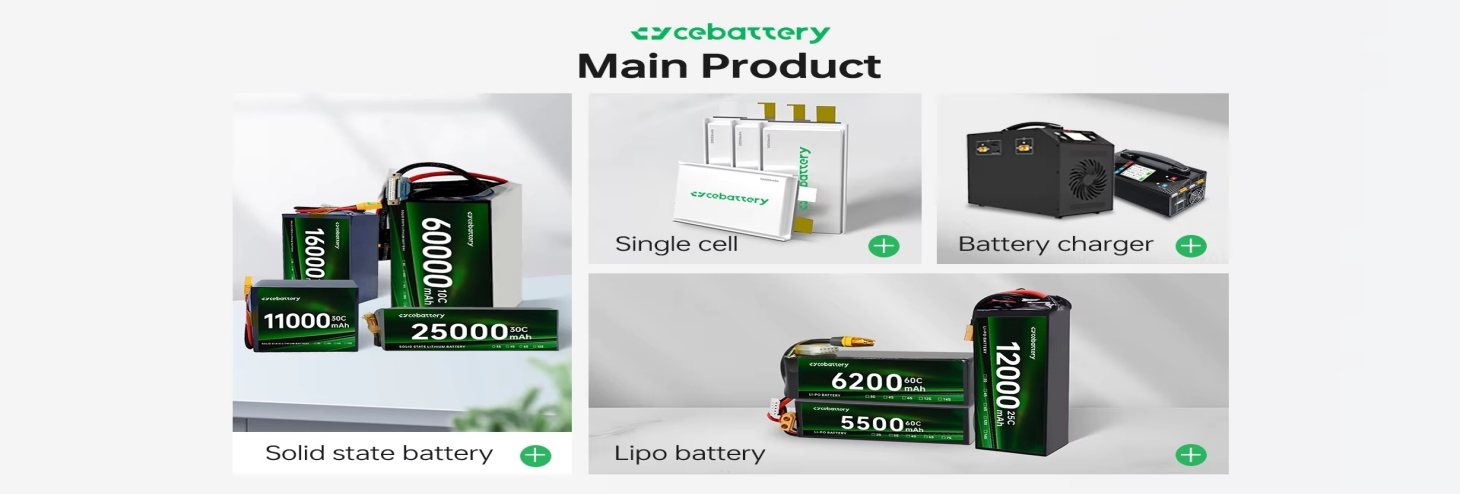
Flight time and performance: who stays in the air longer?
From a pure energy‑density perspective, solid‑state batteries clearly win. Industry data shows that solid‑state cells can reach or exceed about 400 Wh/kg, whereas typical LiPo packs sit in the 150–250 Wh/kg range at the pack level.
For UAV operators, that gap translates into:
Longer flight time or more payload at the same take‑off weight when using solid state drone battery.
Roughly potential “double” endurance in high‑end test projects, compared with conventional lithium‑ion or LiPo, when the rest of the system is optimized.
However, most mass‑market drones today still ship with traditional LiPo packs because they are cheaper and more widely available, and because many platforms are not yet tuned for solid‑state voltages and charging profiles.

Safety and reliability: big advantage for solid‑state
Safety is where the solid state drone battery vs. traditional battery debate becomes most clear. Solid‑state designs use non‑flammable solid electrolytes, which greatly reduce the risk of leakage, fire, or explosion, especially under mechanical damage or high‑temperature conditions.
By contrast:
LiPo packs can suffer thermal runaway if overcharged, punctured, or overheated, because their liquid electrolyte is volatile and flammable.
Solid state drone battery handles a wider temperature window and resist internal short‑circuit growth (like dendrites) more effectively, improving reliability over many cycles.
For operations near people, infrastructure, or in harsh environments, this safety advantage is a strong reason many professional UAV programs are exploring or piloting solid‑state options.
Cost, availability, and integration: LiPo still ahead
In the current market, traditional LiPo batteries still win on practicality for many buyers. They are widely produced, easy to source in almost any configuration, and supported by existing chargers, ESCs, and battery management systems used in the majority of drones.
Solid‑state and semi‑solid‑state drone batteries, on the other hand:
Cost more per Wh and often require specific chargers or BMS firmware.
Are still in early commercialization stages for UAVs, with limited suppliers and longer lead times.
So, who really wins?
For everyday hobby drones and budget‑sensitive projects, traditional LiPo batteries still win today because they are affordable, easy to replace, and good enough for short flights. For high‑end commercial and industrial UAVs that demand maximum flight time, higher safety, and long cycle life, solid‑state or semi‑solid drone batteries are emerging as the long‑term winner, even if they are not yet the default choice for every platform.
When writing for an independent site, a natural way to frame it is: solid‑state vs. traditional drone batteries is not a simple “winner takes all” battle. Solid‑state technology is the future for professional UAV fleets, while LiPo remains the practical workhorse until solid‑state packs become more affordable, standardized, and widely available.
