

If you’re in the drone battery industry, you’ve spent a significant amount of time staring at a battery percentage icon with a knot in your stomach. Whether you are mapping a 500-acre farm, filming a high-speed car chase, or conducting a critical search-and-rescue mission, flight time is the ultimate currency.
For years, we’ve pushed high-performance LiPo batteries for drones to their absolute physical limits. But now, a new player has moved from the lab to the flight line: solid state lithium drone batteries.
The question isn’t just about “new” tech anymore. It’s about how we finally break the 30-minute flight barrier that has plagued the industry for a decade. Can a battery really give you 50% more airtime? The short answer is yes—but you need to understand the “why” behind the chemistry to make it work for your specific fleet.
The Energy Density Leap: Why 50% is Now Possible
The bottleneck for traditional drone lithium batteries has always been energy density. Standard LiPo drone battery packs usually hover around 200–250 Wh/kg. To get more time, you added more batteries, which added more weight, which eventually led to diminishing returns. You were essentially building a flying brick.
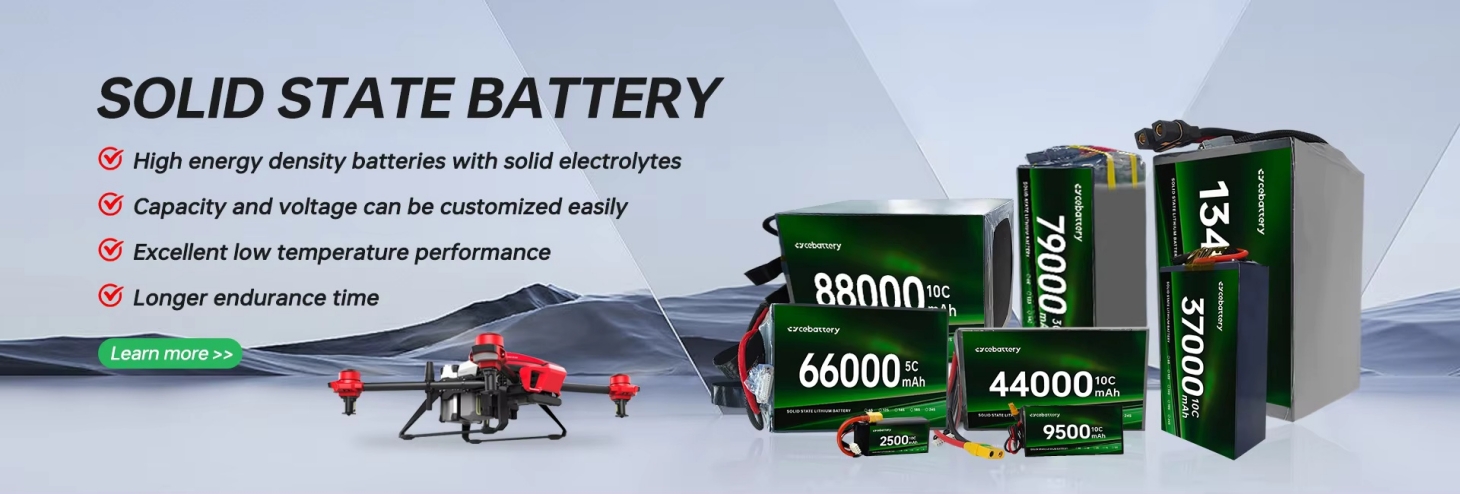
Solid-state technology flips the script. By replacing the heavy, flammable liquid electrolyte found in traditional cells with a thin, solid conductive material, we can pack way more ions into the same footprint. Our latest solid state lithium drone batteries are pushing energy densities north of 350-400 Wh/kg.

What does that look like in the real world? Imagine an industrial inspection drone that usually lands at the 25-minute mark. With a solid-state drone battery upgrade, that same drone stays in the air for 38 to 40 minutes without increasing the takeoff weight. That’s not just a marginal gain; it’s the difference between finishing a job in one flight or having to pack up, swap batteries, and recalibrate mid-mission.
Beyond the Clock: Safety and Survival in Extreme Cold
If you’ve ever flown in the mountains or during a northern winter, you know that standard high-performance LiPo batteries for drones hate the cold. Voltage sag can trigger a “critically low battery” warning just seconds after takeoff.
One of the most overlooked benefits of the solid-state transition is thermal stability. Because there is no liquid inside to thicken or freeze, these batteries maintain a much more consistent discharge curve in sub-zero temperatures. Furthermore, the risk of “thermal runaway”—the fancy term for a battery fire—is virtually eliminated.
You can puncture a solid-state cell, and it won’t explode. For operators flying expensive $20,000 sensor payloads, that peace of mind is worth as much as the extra flight time itself.
We’ve seen our agricultural clients in high-altitude regions move away from traditional packs entirely. They need equipment that doesn’t just work in a lab, but survives a 4:00 AM spray run in 30°F weather.
Finding the Right Drone Battery Power Solution for Your Mission
While the buzz is all about solid-state drone battery right now, we know that every mission is different. Sometimes, you need the raw “burst” power of traditional drone lithium batteries for racing or heavy-lift maneuvers. Other times, you need the long-endurance, slow-and-steady reliability of solid-state.
As a manufacturer, we don’t believe in a one-size-fits-all approach. Whether you are an OEM looking to integrate a custom battery compartment for a new drone model or a fleet manager trying to squeeze more ROI out of your current hardware, the “right” battery is the one that balances weight, cost, and cycle life.
The 50% boost in flight time is no longer a “future” promise—it’s a hardware reality. The transition is happening now, and those who adopt early are already seeing the cost-per-flight hour drop significantly.
Stop fighting the 20-minute limit.
At our facility, we specialize in high-performance LiPo and cutting-edge solid-state solutions tailored to your specific UAV requirements. We help you move past the “off-the-shelf” limitations and build a power system that actually fits your operational needs.

- How Does a High Energy Solid State Battery Improve FPV Endurance?
- Where Can You Get Original Factory Solid State UAV Batteries in Bulk?
- Why Choose Solid State Drone Batteries for Safer Long Missions in 2026?
- Is a 6S Solid State Battery Pack Worth It for Your Commercial Drone?
- Which Solid State Drone Battery Boosts UAV Flight Time by 40%?

Get paid for every referral—enroll in our affiliate program!


Start earning on every sale—become our affiliate partner today!