

How to Match UAV Power Needs with the Right High Voltage Pack?
Picking a high voltage UAV battery by spec sheet alone is one of the most reliable ways to end up with the wrong pack. The numbers look right. The voltage matches.
And then the aircraft underperforms, runs hotter than expected, or the battery degrades faster than the rated cycle life suggests it should.
The problem is almost always a mismatch between what the platform actually demands and what the battery is built to deliver. Closing that gap isn’t complicated, but it requires working through the right variables in the right order.
Here’s how to do it:
Start With What Your Platform Actually Draws
Before evaluating any UAV battery, you need real power consumption data from your specific aircraft and mission profile — not estimations, not manufacturer claims for the airframe, and not numbers borrowed from a similar platform.

The two figures that matter most:
Peak current draw — the maximum instantaneous current the system pulls during aggressive maneuvers, rapid ascents, or heavy-payload lifts. This is what determines whether your battery’s C rating is sufficient.
A high voltage pack rated for 25C continuous on a platform pulling 35C peaks will sag, run hot, and degrade in ways that won’t show up until several cycles in.
Average mission current — the mean current draw across a typical flight. This, combined with pack capacity in mAh, gives you a realistic flight time estimate.
It also tells you how hard the battery is working relative to its rated capacity — a pack running near its continuous discharge limit the entire flight will age differently than one cycling through a relaxed average load.
A telemetry-capable flight controller or a dedicated current logger run across two or three representative missions gives you both numbers. It’s worth doing before committing to a battery specification.

Match Voltage Configuration to Motor KV and ESC Rating
High voltage packs are only useful if the rest of the power system is engineered to handle them. This sounds obvious and still causes expensive mistakes constantly.
Motor KV rating and voltage are directly linked — running a motor at higher voltage than its KV is optimized for produces excess RPM, heat, and in some cases motor failure. ESC voltage ratings have hard limits that high voltage packs will exceed if the hardware isn’t rated accordingly.
Before selecting a high voltage pack configuration — 6S, 8S, 12S — confirm that your motors are wound for the voltage range, your ESCs are rated above the pack’s fully charged voltage with adequate headroom, and your power distribution board and connectors are rated for the current the system will draw at that voltage.
Getting one of these wrong doesn’t just cost performance. It costs hardware.
Energy Density vs. Raw Capacity: Pick the Right Trade-off
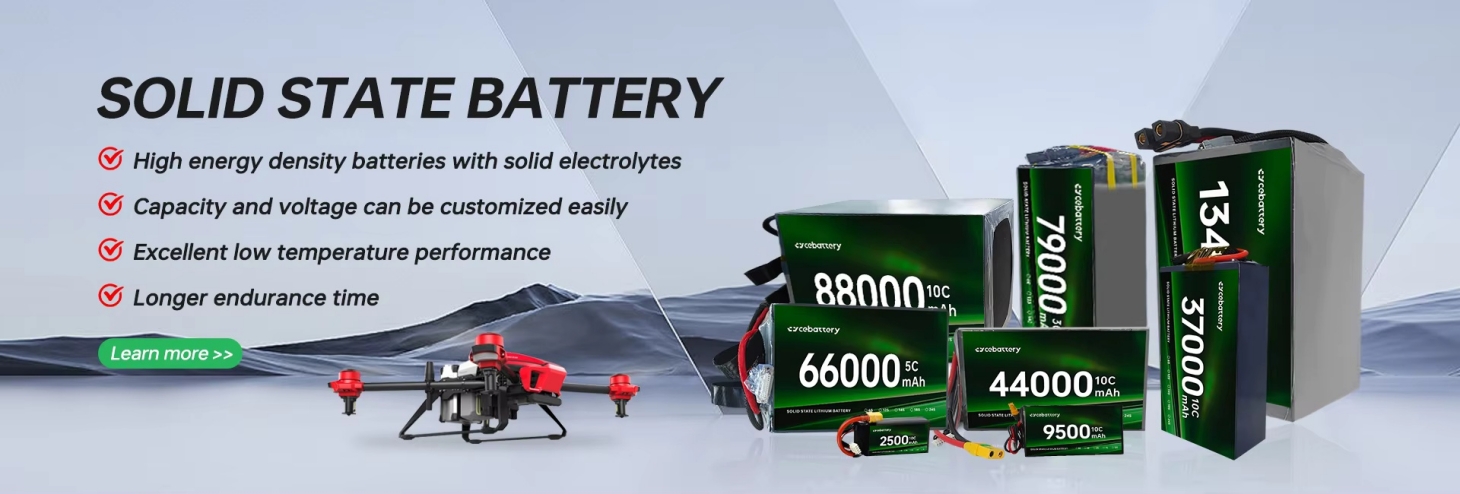
High voltage packs come in different capacity configurations, and more mAh isn’t always the right answer. A heavier pack carries more energy but costs more in lift — and on many UAV platforms, that weight penalty erodes the flight time advantage you were trying to gain.
The metric to optimize is energy density: watt-hours per kilogram at the pack level. A higher energy density battery delivers more usable flight time per gram of battery weight, which is the actual goal.
For operators where mission endurance is the primary constraint, this is where solid-state lithium-ion UAV batteries become worth evaluating seriously.
The energy density advantage over conventional lithium polymer packs is meaningful at the platform level — particularly on high-voltage configurations where pack weight is already a significant fraction of total aircraft weight.
Thermal Behavior Under Load
A high voltage pack that runs excessively hot during typical missions is either undersized for the application, has a C rating that’s too low, or has cell quality issues that lab specs don’t reveal.
Post-flight temperature checks are a quick diagnostic — a pack that’s noticeably warm is working harder than it should be.
Consistent operating temperature within the manufacturer’s rated range is what longevity looks like in practice.
Where CEBATTERY Fits This Process
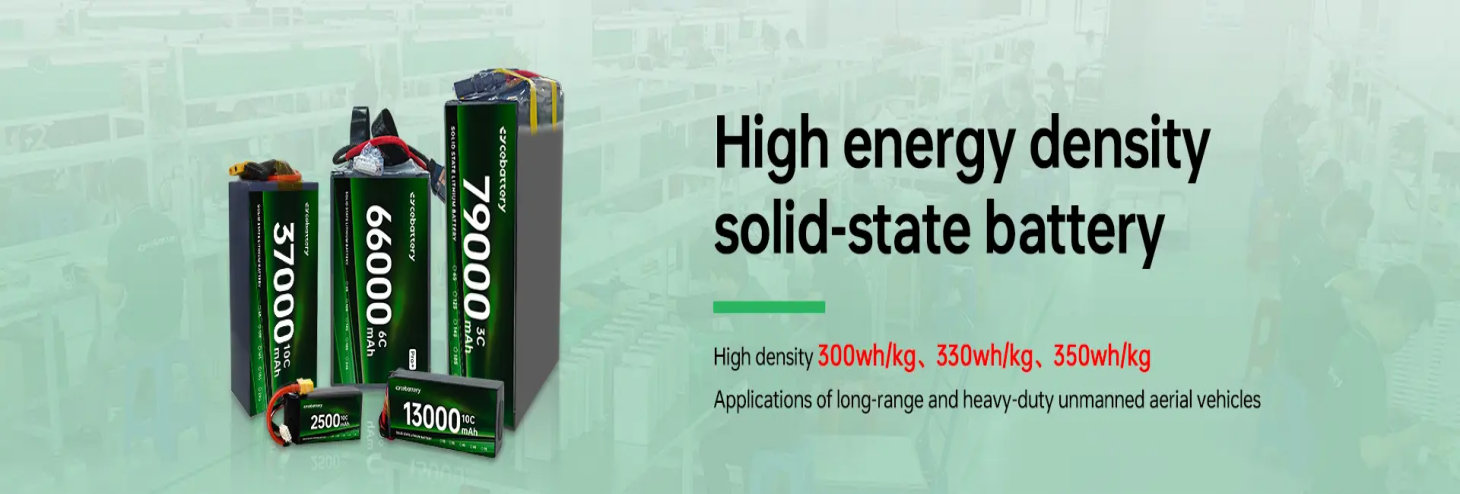
CEBATTERY designs high-performance lithium polymer and solid-state lithium-ion UAV batteries built for the power demands of commercial and industrial drone platforms.
High voltage configurations, tight cell matching, and BMS integration calibrated for real operating conditions — not optimized for spec sheet numbers in isolation.
The development cycle for the company’s new products only takes 3 to 7 days. Currently, the annual sales volume has covered regions such as Europe, America, the Middle East, and Southeast Asia.
CEBATTERY has provided services to over 100 global customers, including retailers, wholesalers, brand owners, and manufacturers.
CEBATTERY has obtained multiple authoritative certifications such as ISO9001, UL, CE, EAC, RoHS, UN38.3, and MSDS. And have always adhered to innovation-driven strategies and strict quality control, and are committed to providing safe, efficient and reliable battery products to global customers.
Match the platform requirements first. Then find the battery that meets them. That sequence is what makes the selection process work.

- Meet CEBATTERY at the 2026 Shanghai Low-altitude Economy Expo
- What’s the Top High Voltage Battery for Long-Range UAV Missions?
- Solid State vs Lipo Battery—Which Delivers Better UAV Safety and Life Cycle?
- Why Original Factory Batteries Outperform Cheap Generic Options?
- How to Match UAV Power Needs with the Right High Voltage Pack