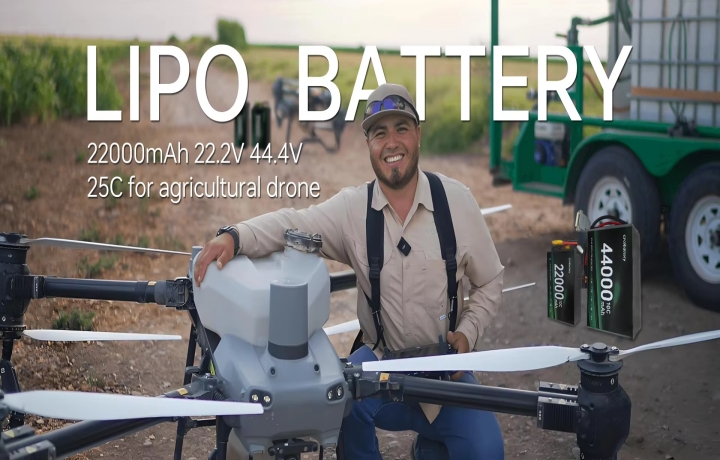
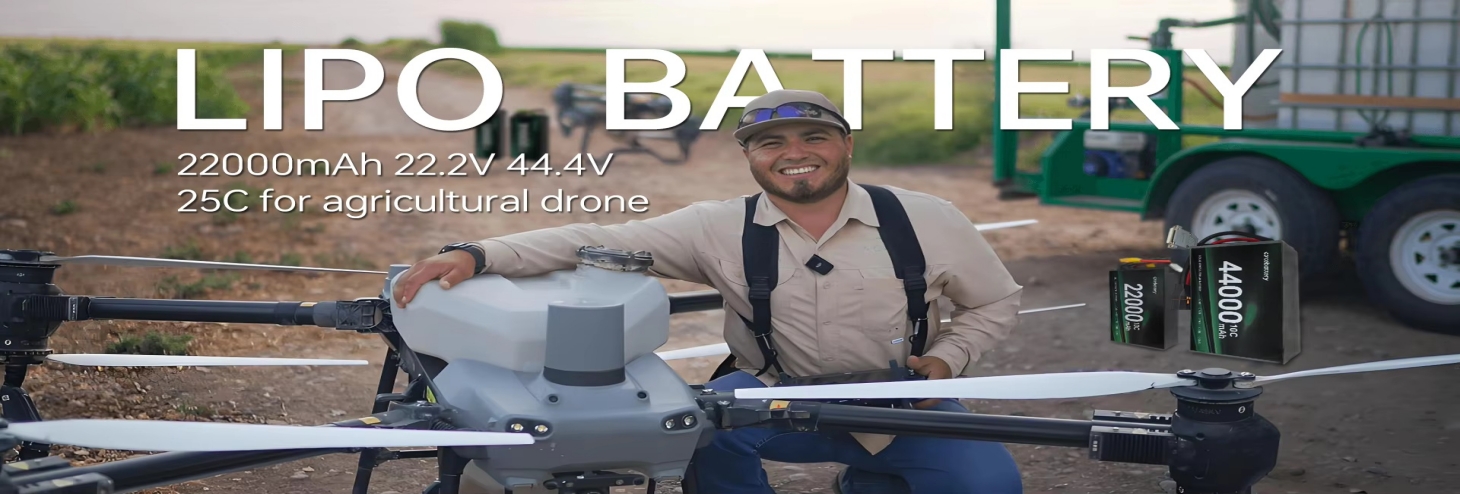
Running an 8-hour field survey isn’t just about having a high-tech drone or a agricultural drone battery; it’s about managing your power. In the world of precision agriculture, time is quite literally money. If your drone is sitting on the dirt waiting for a charge, you aren’t collecting the data needed for crop health or yield mapping.
Choosing the right agricultural drone battery is the difference between finishing a 500-acre plot by lunch or still being out there when the sun goes down. Here is how you should think about your power setup for those long, demanding survey days.

The “Cycle of Three” Strategy
For an 8-hour day, you don’t need 20 batteries. You need a workflow. Most professionals use the “Rule of Three.”
One in the air.
One cooling down (LiPo batteries shouldn’t be charged while hot).
One on the fast-charger.
To make this work for a full shift, you need batteries that support high-speed charging without degrading their lifespan. Look for a “C-rating” that suggests stability under both high discharge and rapid input.
- Capacity vs. Weight: The Sweet Spot
When browsing specs, “mAh” (milliampere-hours) is the first thing you’ll see. While it’s tempting to buy the biggest battery available, there is a point of diminishing returns.
A heavier battery requires more thrust to stay airborne, which draws more current and generates more heat. For 8-hour field surveys, you want the highest energy density—the most power for the least weight. Generally, for large-scale agricultural drones, 16,000mAh to 30,000mAh units are the industry standard. Anything larger often makes the drone sluggish and reduces the actual “useful” flight time.
- Voltage and Cell Count (6S, 12S, or 14S?)
Agricultural drones are the heavy lifters of the UAV world. They usually require higher voltage to maintain efficiency. Most modern survey drones run on 12S or 14S configurations.
Higher voltage systems are generally more efficient for long-duration tasks because they can produce the same amount of power with less current (amps). This keeps the internal temperature of the battery lower, which is crucial when you are flying back-to-back missions in the summer heat.
- Intelligence Matters: The BMS
In a dusty field, you don’t have time to baby your batteries with a multimeter. This is where a Smart Battery Management System (BMS) becomes essential.
A “Smart” agricultural drone battery will:
Self-discharge to a safe storage level if you don’t use it for a few days.
Balance cells automatically during charging to prevent a single cell from failing.
Log data, showing you exactly how many cycles the battery has been through and its current “health” percentage.
For 8-hour surveys, being able to quickly glance at an LED indicator on the battery to see its charge level saves precious minutes.
- Dealing with the Elements
Agriculture is a “dirty” business. Your batteries will be exposed to dust, moisture, and extreme temperatures.
Heat Management: Look for batteries with integrated heat sinks or optimized airflow casings. If a battery gets too hot, the BMS will throttle the power, or worse, the battery will “puff” and become a fire hazard.
Environmental Protection: Ensure the connectors are high-quality (like AS150 or specialized plug-and-play interfaces) to prevent corrosion from fertilizers or humidity.
- The ROI: Cycle Life
Don’t just look at the upfront cost. A $500 battery that lasts 100 cycles is far more expensive than a $800 battery that lasts 400 cycles.
For 8-hour daily use, you want batteries rated for high cycle life. Check if the manufacturer provides a warranty based on cycles. A high-quality LiPo or LiHV (High Voltage) battery should maintain at least 80% of its capacity after 200–300 flights if treated correctly.
Summary Checklist for 8-Hour Surveys
Before you hit “buy,” run through this list:
Is the weight-to-capacity ratio optimized for my specific drone model?
Can it handle a 1C or 2C charge rate for fast field turnarounds?
Does it have a smart BMS for easy health monitoring?
Are the connectors rugged enough for field environments?
Investing in the right agricultural drone battery system isn’t just about buying power; it’s about buying reliability. When you’re three miles away from the nearest power outlet, reliability is the only thing that matters.