

For most FPV pilots and UAV operators, “20+ minutes FPV drone flights” is where typical freestyle or racing setups stop and true endurance builds begin. The best LiPo battery for this goal is not a single model, but a well‑matched, high‑performance LiPo pack designed around your frame size, motor KV, flying weight, and cruising amps, often combined with long‑range or cinematic tuning.
For commercial users and manufacturers, this also needs to balance energy density, safe fast‑charging, and stable performance over hundreds of cycles, which is where custom drone lithium batteries and even solid state lithium drone batteries start to make real sense.
Below is a practical, conversion‑oriented guide you can adapt directly to your independent site blog.
How Battery Choice Unlocks 20+ Minute FPV drone flights?
When people ask about “the best LiPo battery for 20+ minute FPV drone flights,” they usually underestimate how many variables matter beyond mAh. The battery is central, but airframe efficiency, prop choice, firmware tuning, and flying style all decide whether the same pack gives you 8 minutes or 22 minutes.
For long‑range and cinematic FPV platforms, high‑performance LiPo batteries for drones still play a key role, especially on 7‑inch or larger frames that are optimized for efficient cruising rather than aggressive racing. These builds typically:
Use larger, more efficient props and low‑KV motors to pull fewer amps at cruise throttle.
Run higher capacity LiPo or semi‑solid packs in the 3000–5000 mAh range or more, tuned for long‑range flight times.
Aim for smooth, steady throttle rather than constant full‑stick punch‑outs, which keeps current draw in an efficient window.
For manufacturers and professional operators, the “best” pack is the one that consistently hits the required 20+ minutes at working payload, in real weather, with enough margin left to land safely and protect the battery’s long‑term health.

What to Look for in High‑Performance LiPo Batteries for Drones
If your goal is 20‑plus minutes in the air, your LiPo selection needs to be deliberate rather than just “highest capacity available.” The following factors are what separate a generic pack from a well‑engineered drone lithium battery suitable for endurance FPV, commercial filming, or inspection.
Capacity vs. weight balance
Simply adding more mAh does not guarantee longer FPV drone flights time; extra weight increases current draw and can quickly eat the gain. In practice, many long‑range FPV and mapping setups use mid‑to‑high capacity packs sized for their frame, often in the 3000–5000 mAh class or combined multi‑pack solutions, instead of one extremely heavy battery.
Realistic discharge capability
For cruising builds, you rarely need extreme burst C‑ratings, but you do need stable voltage throughout the flight and safe thermal behavior. High‑performance LiPo batteries for drones are built with consistent cells and tight quality control, so voltage sag and heating stay predictable even on longer missions.
Fast‑charging within safe limits
Long‑range pilots, aerial photography crews, and industrial UAV teams often run multiple missions per day, so reliable fast charging becomes a key requirement. A well‑designed drone lithium battery supports higher charge rates with integrated safety features and clear charging guidelines, helping reduce turnaround time without sacrificing cycle life.
Robust construction for harsh environments
Industrial and agricultural UAVs may face dust, vibration, temperature swings, and long duty cycles. Packs built specifically as drone lithium batteries—rather than generic RC packs—tend to include stronger mechanical protection, better inter‑cell bonding, and more reliable connectors, which improves long‑term safety and reliability in the field.
For certain applications, long‑range pilots also use lithium‑ion packs for maximum energy density at the expense of punch, but these must be chosen and configured carefully to stay within safe discharge limits.
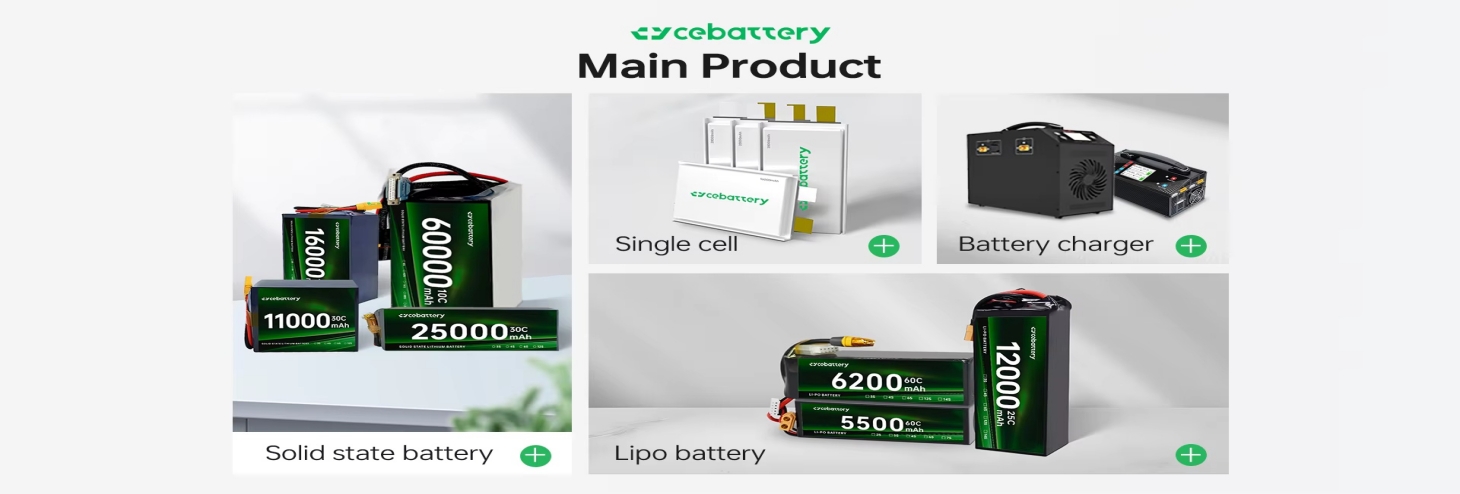
When to Consider Solid State Lithium Drone Batteries
If 20+ minutes is your floor rather than your stretch goal—especially for mapping, corridor inspection, or security patrol—solid state lithium drone batteries deserve serious attention in your roadmap. These pack designs replace the traditional liquid electrolyte with a solid electrolyte, which changes both safety and performance characteristics.
Solid state lithium drone batteries can offer:
Higher safety margins
The solid electrolyte significantly lowers leakage and thermal runaway risk, which is critical for professional drones operating over infrastructure, people, or critical assets. This is particularly attractive for enterprise fleets and government projects that must meet strict safety and certification standards.
Higher usable energy density
In endurance‑focused UAVs, solid state packs can be engineered to store more energy per unit weight or volume compared with some conventional LiPo solutions, which directly supports 30‑, 40‑, or even multi‑hour flight profiles when combined with efficient airframes.
More stable long‑term performance
Commercial UAV operators who fly daily care less about one spectacular flight and more about predictable performance across hundreds of charge cycles. A solid state architecture can help keep capacity fade and internal resistance growth more controlled, reducing unexpected downtime and replacement cost.
In practice, many brands are now exploring mixed portfolios: high‑performance LiPo batteries for drones on FPV and agile multirotors, and custom solid state lithium drone batteries for long‑range VTOL, mapping, or inspection platforms.
Turning Specs Into Real‑World Flight Time
From a marketing and product‑design perspective, the smartest way to talk about “the best LiPo battery for 20+ minute FPV drone flights” is to tie your packs to concrete, testable scenarios: frame size, all‑up weight, cruising current, and typical mission duration. That is what serious customers—drone manufacturers, aerial filming teams, industrial and agricultural operators, and advanced hobbyists—actually care about.

For example, you might present reference configurations such as:
A 7‑inch long‑range FPV platform with a mid‑capacity endurance LiPo tuned for 20–25 minutes of smooth cruising.
A lightweight commercial mapping quad with custom drone lithium batteries designed to meet a specific flight‑time and payload requirement.
A VTOL or hybrid UAV platform using early solid state lithium drone batteries to push well beyond traditional multirotor endurance.
If a potential client can look at your examples and think, “that looks like my drone and my mission,” they are far more likely to reach out for specs or samples. Make it easy for them to do that: invite them to share their frame size, motor KV, target flight time, and operating environment, then suggest a tailored battery solution instead of a one‑size‑fits‑all pack.
On your independent site, you can position your brand as a technical partner rather than just a supplier of high‑performance LiPo batteries for drones. Offer to help visitors calculate realistic flight times, optimize pack voltage and capacity, and compare LiPo and solid state options for new airframes.
A clear call‑to‑action—such as asking for project details and offering custom pack recommendations or sample applications—turns an informational article into a steady source of qualified leads, and helps your customers get much closer to that 20‑minute‑plus FPV drone flights they are actually chasing.

Drone battery Exhibition FPV battery Lipo Battery Solid State Batteries
- Meet CEBATTERY at the 2026 Shanghai Low-altitude Economy Expo
- What’s the Top High Voltage Battery for Long-Range UAV Missions?
- Solid State vs Lipo Battery—Which Delivers Better UAV Safety and Life Cycle?
- Why Original Factory Batteries Outperform Cheap Generic Options?
- How to Match UAV Power Needs with the Right High Voltage Pack