
What’s the Ideal UAV Battery Voltage for Longer Missions?
It’s one of the most common questions in commercial drone operations, and the honest answer is: it depends — but not in the vague, unhelpful way that phrase usually lands.
The ideal UAV battery voltage for longer missions depends on three specific things: your aircraft’s power system design, your payload weight, and how you define “longer.” Get clear on those three variables and the voltage question largely answers itself.

Here’s how to think through it.
Voltage Is a System Decision, Not Just a UAV Battery Decision
Before getting into specific voltage configurations, it helps to understand what voltage actually does in a UAV Battery power system.
Higher voltage allows motors to produce the same power output at lower current. Lower current means less resistive heat loss in the wiring, ESCs, and motor windings.
Less heat means more efficient power delivery — and more of your battery’s stored energy goes toward lifting and flying the aircraft rather than warming up components.
That efficiency relationship is why higher-voltage configurations tend to favor longer missions. More of the energy in the pack actually reaches useful work. But there’s a ceiling, and it’s determined by your hardware.
The Common Voltage Configurations and What They’re Actually For
3S (11.1V nominal): Still the right choice for lightweight platforms — sub-250g aircraft, small payload drones, indoor inspection UAVs.
The reduced weight of a 3S LiPo pack can offset the efficiency advantage of higher voltage when the airframe itself is small. For extended missions on these platforms, capacity (mAh) matters more than voltage.
4S (14.8V nominal): A solid middle ground for mid-size commercial platforms. Common in mapping drones, agricultural survey UAVs, and medium-range inspection aircraft.
Good balance between pack weight and efficiency gains. If you’re flying a 5-inch to 7-inch platform with moderate payloads, 4S is often where longer mission times land.
6S (22.2V nominal): The dominant configuration for serious commercial work — heavy-lift platforms, high-payload inspection drones, long-range delivery systems.
The efficiency gains at 6S are significant enough that despite heavier pack weight, total mission time improves for larger aircraft. Motors running on 6S run cooler, which also means more consistent performance across the full discharge curve rather than degrading as the pack depletes.
12S (44.4V nominal) and above: Industrial and enterprise-grade heavy-lift platforms. Not relevant for most commercial operators, but increasingly common in specialized agricultural, logistics, and infrastructure inspection applications where payload requirements exceed what 6S systems can handle efficiently.
Why Higher Voltage Alone Doesn’t Guarantee Longer Flights
This is where the nuance matters. Switching to a higher-voltage configuration improves efficiency, but you’re also typically adding battery weight — and weight costs you flight time just as surely as inefficiency does.
The relationship to optimize isn’t just voltage. It’s voltage relative to airframe size and payload. A 6S pack on a platform designed for 4S doesn’t automatically fly longer — the aircraft may not be able to carry the additional weight effectively, or the motor KV rating may be mismatched.
The longer mission equation balances four things simultaneously: voltage configuration, pack energy density (Wh/kg), total system weight including payload, and motor efficiency at the chosen voltage. Optimizing one variable without the others produces marginal results.

Where Battery Chemistry Enters the Equation
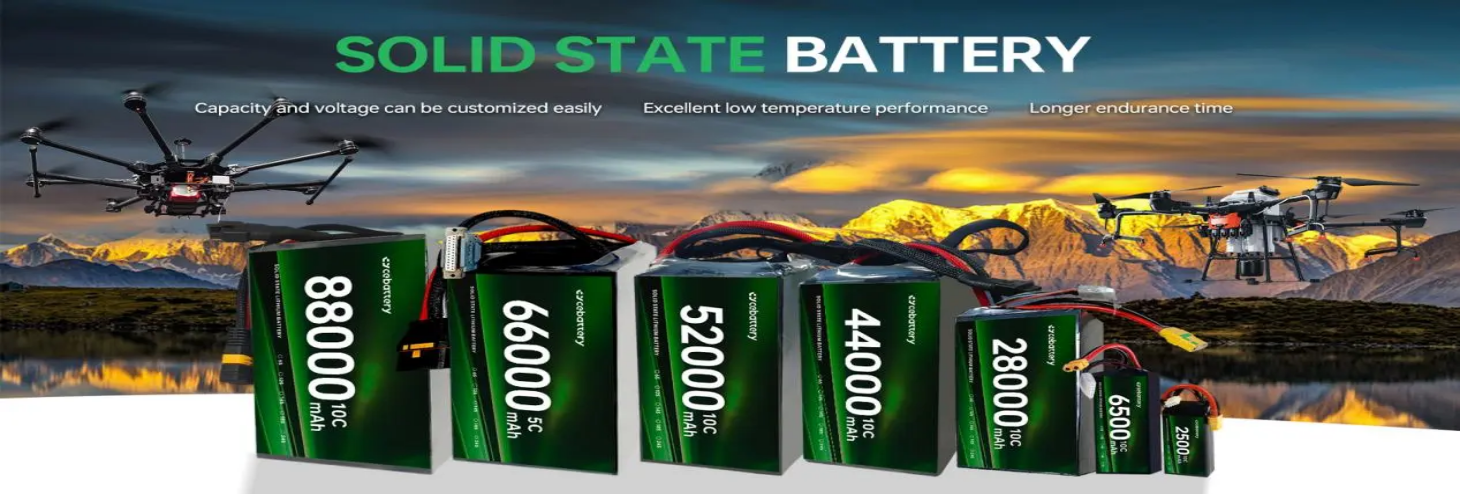
This is where solid-state lithium-ion batteries become relevant for long-mission applications. Better energy density at the pack level — more watt-hours per kilogram compared to conventional LiPo — means you can carry more usable energy without proportionally increasing weight.
For operators where mission endurance is the primary constraint, the energy density advantage of solid-state chemistry can extend flight windows meaningfully, especially on platforms already running efficient high-voltage configurations.
Matching the Battery to the Mission
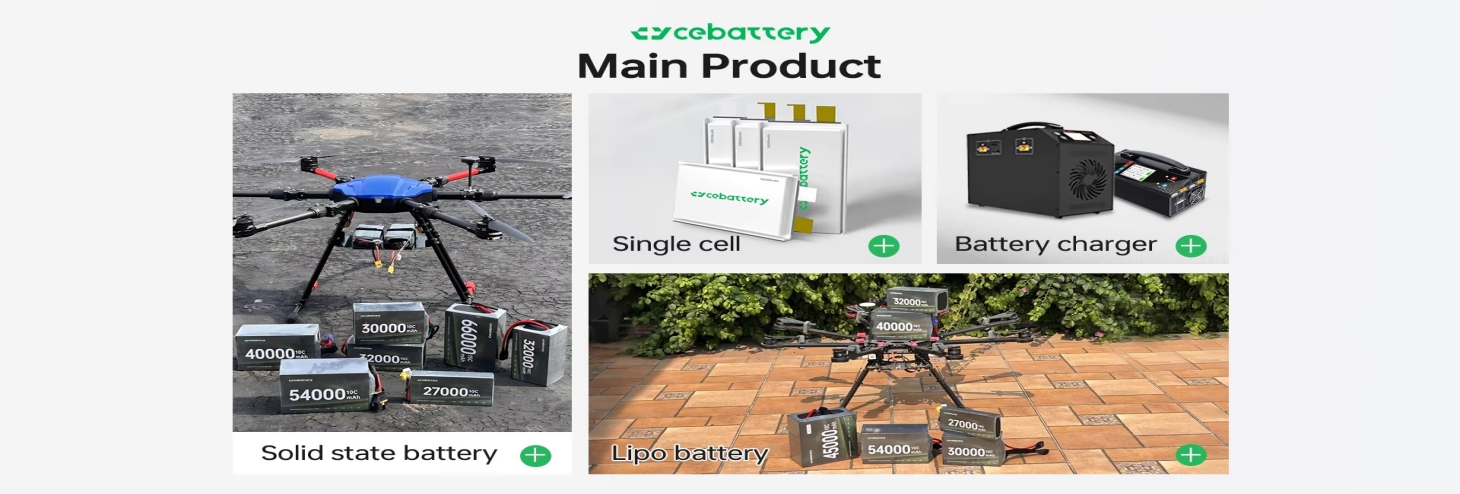
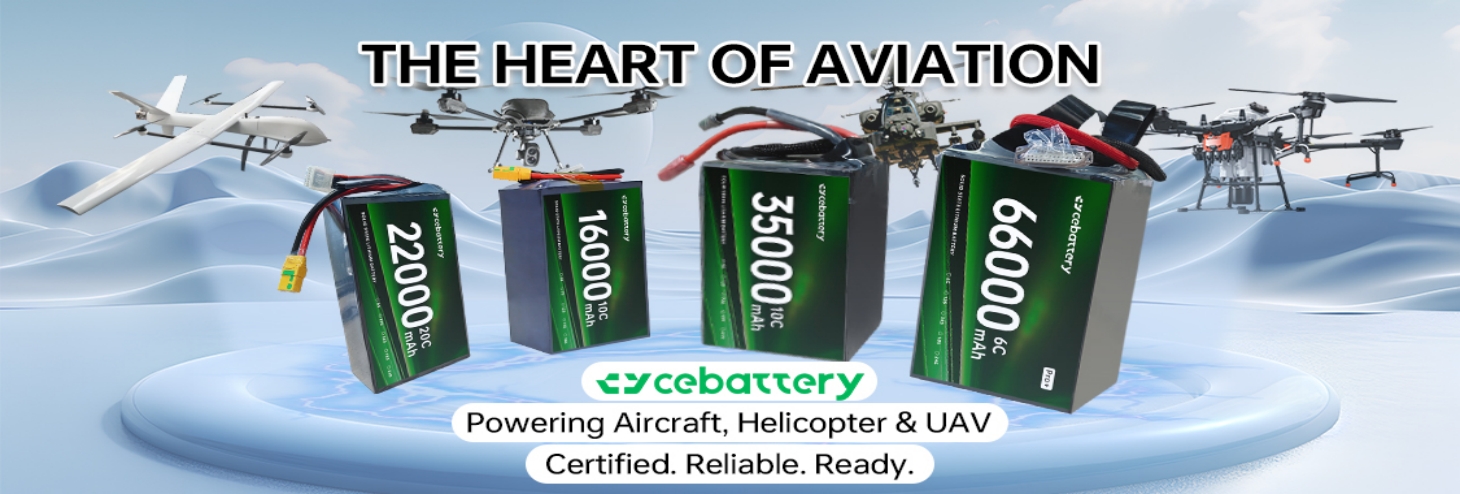
CEBATTERY manufactures high-performance lithium polymer and solid-state lithium-ion UAV battery across voltage configurations designed specifically for commercial drone applications.
The right voltage choice paired with quality cell construction and proper energy density makes the difference between a battery that technically fits your drone and one that actually extends your missions.
Voltage is the starting point. Everything else determines whether it delivers.
CEBATTERY currently has over 300 employees, including 13 engineers and 54 operation staff. Adhering to the principle that “price = value = quality”, it combines internal research and development with production.
Through innovation and scientific management, it continuously optimizes products and services, providing high-quality and customized battery solutions for various needs.

- Meet CEBATTERY at the 2026 Shanghai Low-altitude Economy Expo
- What’s the Top High Voltage Battery for Long-Range UAV Missions?
- Solid State vs Lipo Battery—Which Delivers Better UAV Safety and Life Cycle?
- Why Original Factory Batteries Outperform Cheap Generic Options?
- How to Match UAV Power Needs with the Right High Voltage Pack