

Is a 6S Lipo Battery Ideal for FPV Beginners or Advanced Racers?
Walk into any FPV forum or Discord server and ask this question. You’ll get confident answers pulling in opposite directions — half the room will tell you 6S is wasted on beginners, the other half will say just start on 6S lipo battery and save yourself the trouble of switching later.
Both camps have a point. Neither is completely right. And the honest answer depends on factors most of those forum posts don’t bother asking about.
Here’s the actual breakdown.
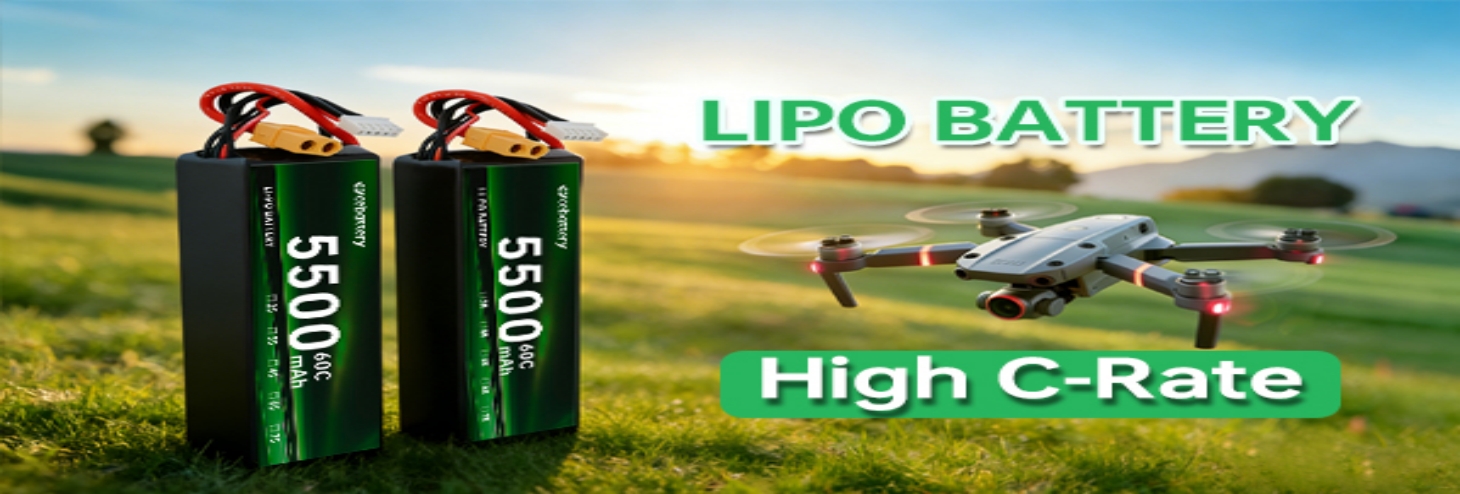
What 6S Lipo-Batterie Means in Practice
Six cells in series gives you 22.2V nominal — 25.2V fully charged. That’s roughly double the voltage of a 3S LiPo pack, and it changes how the entire power system behaves.
Higher voltage lets motors produce the same thrust at lower current. Less current means less heat in the motor windings, ESCs, and power leads.
The throttle response is sharper, the power band extends further, and the consistency of performance from full charge to low battery is noticeably better than on lower-voltage configurations.
On paper, that sounds like an upgrade anyone would want. In practice, the benefits only materialize if the rest of your build is designed for them.
The Case Against 6S for FPV Beginners
For someone learning to fly FPV, the honest argument against starting on 6S has nothing to do with the battery itself. It’s about what the rest of the build has to be.
6S requires motors wound for the voltage range — typically lower KV than 4S motors to avoid over-revving at higher voltage. It requires ESCs rated above 25.2V with adequate current headroom.
VTX, camera, and any other electronics on the stack need to handle the voltage or require proper regulators.
Build incorrectly and you’re letting out the magic smoke on your first few flights.
More practically: when beginners crash — and beginners crash — the repair costs on a 6S build are higher.
ESCs rated for 6S cost more than 4S equivalents. Motors wound for 6S are pricier. The learning curve isn’t just flying; it’s also understanding a power system where the margin for wiring mistakes is narrower.
There’s also the throttle sensitivity issue. A 6S lipo battery build with properly matched motors is powerful, responsive, and fast. For someone still developing muscle memory on the sticks, that aggression can make the learning process harder, not easier.
The Case For 6S — Even for Beginners
Here’s where the “just start on 6S” crowd gets something right.
If you’re building a 5-inch freestyle or racing quad that you intend to fly for years and improve on, starting on 6S means you’re never upgrading out of a power system that felt like a stepping stone. The efficiency advantage is real. The longer motor life from lower operating temperatures is real.
The performance ceiling — particularly for freestyle pilots who’ll eventually want to push locked-in lines and technical sequences — is meaningfully higher on 6S than 4S.
Some pilots also find that 6S’s more linear, consistent power delivery is actually easier to manage than the spikier feel of an underpowered 4S build being pushed beyond its comfort zone. Smooth throttle response teaches better habits than fighting a twitchy power curve.
The counterpoint to the “beginners crash more” argument: if you’re buying quality components rated for 6S from the start and flying a proven 5-inch platform, crash repairs are manageable and the hardware investment pays off over a longer service life.
Who 6S Is Actually Best Suited For
Advanced racers and serious freestyle pilots — unambiguously yes. 6S is the dominant voltage in competitive FPV for good reason. The performance advantages compound at the skill level where pilots can actually use them.
Beginners on a 5-inch build who want to invest once and grow into the platform — a reasonable case for 6S, provided the build is done correctly with matched components.
Beginners on smaller platforms — 3-inch, micro quads, whoops — stick with 3S or 4S. The weight of a 6S LiPo pack doesn’t suit smaller airframes, and the efficiency benefits don’t translate the same way.
One Thing That Doesn’t Change
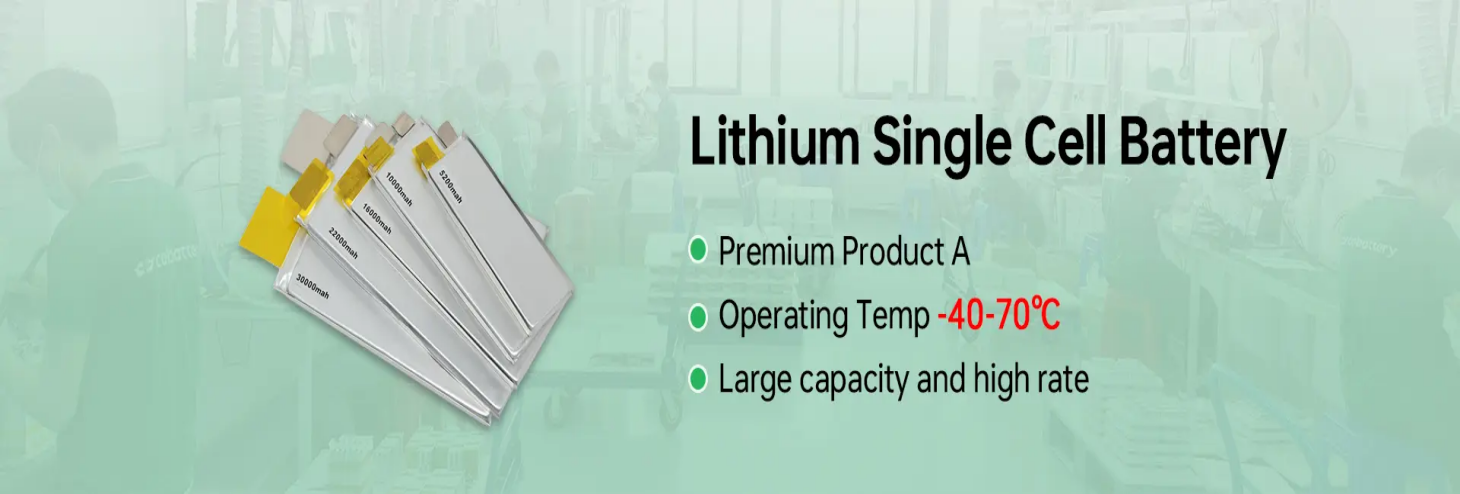
Voltage configuration matters. Battery quality matters more. A mediocre 6S LiPo pack with poor cell matching and weak discharge consistency will underperform a well-built 4S pack from a manufacturer that engineers specifically for FPV UAV applications.
Shenzhen CEBATTERY Technology Co., Ltd. is a company based in Shenzhen with 14 years of experience in the lithium battery industry. It focuses on providing high-performance lithium polymer batteries and solid-state lithium-ion batteries solutions for various types of drones, including agricultural spraying drones, large-load drones, surveying and mapping drones, and fixed-wing multi-rotor drones.
CEBATTERY produces high-performance lithium polymer UAV batteries built with the discharge consistency and cell quality that make whichever voltage you choose actually deliver what it’s supposed to.
- Is a 6S Lipo Battery Ideal for FPV Beginners or Advanced Racers?
- Which Drone Battery Brand Offers the Great OEM Customization in 2026?
- Meet CEBATTERY at the 2026 Shanghai Low-altitude Economy Expo
- What’s the Top High Voltage Battery for Long-Range UAV Missions?
- Solid State vs Lipo Battery—Which Delivers Better UAV Safety and Life Cycle?
